- All
- Product Name
- Product Keyword
- Product Model
- Product Summary
- Product Description
- Multi Field Search

Views: 0 Author: Site Editor Publish Time: 2026-06-08 Origin: Site
Heavy machinery castings demand extreme pouring temperatures to achieve absolute structural integrity. Components like engine blocks, turbine housings, and hydraulic valves routinely push traditional molding materials past their physical limits. When silica sand fails under intense heat, foundries face severe and costly casting defects. You often see burn-on, veining, and dimensional inaccuracies ruining otherwise perfect pours. These heat-induced flaws inevitably drive up scrap rates and waste valuable production hours.
To stabilize the molding environment, foundry engineers are rapidly transitioning away from standard silica. They are replacing special sands like chromite or zircon with advanced ceramic alternatives. This article provides an evidence-based evaluation of upgrading your molding media. We will examine how low thermal expansion and high refractoriness directly improve casting yields. You will learn how upgrading to these modern materials prevents defects and significantly reduces post-casting machining requirements.
Thermal Expansion Control: Ceramic sand exhibits nearly zero thermal expansion, drastically reducing heat-induced casting defects in complex machinery components.
Cost-to-Yield Ratio: While the initial procurement cost is higher than silica, the reclamation rate (up to 98%) and reduced binder consumption often lower the per-casting cost.
Process Compatibility: Upgrading requires minor calibration in binder ratios and reclamation screening, but integrates seamlessly into most existing sand loop systems.
Understanding exactly when and why mold materials fail is critical for machinery foundries. Heavy steel and iron castings require extreme pouring temperatures. When molten metal exceeding 1,450°C enters the mold cavity, it exposes the sand to violent thermal shock. Traditional silica sand struggles under these conditions. It undergoes rapid physical phase changes, expanding aggressively and unpredictably. This sudden expansion creates immense mechanical stress across the mold wall.
This stress inevitably causes the mold surface to crack or shift. Liquid metal quickly penetrates these tiny fissures. As the metal cools, it forms sharp, hard ridges known as veining. Thick-walled machinery components are highly susceptible to these expansion defects. Operators must then spend hours manually grinding these flaws away in the fettling room. This secondary processing creates bottlenecks and slows down your entire production timeline.
Integrating thermal stable foundry sand changes this dynamic entirely. Ceramic grains maintain exceptional dimensional stability under intense heat. The mold wall remains rigid and unyielding. Metal cannot penetrate because cracks never form. Scabbing, veining, and burn-on virtually disappear.
You should frame this material upgrade purely as an aggressive preventative measure. It functions as an insurance policy against poor casting yields. You eliminate the root cause of the most expensive secondary operations. Less grinding means lower labor costs and fewer consumable expenses. More importantly, your scrap rates plummet. Parts move directly from the shakeout area to finishing with minimal intervention.
Evaluating your sand options requires looking closely at material science. The differences between silica, special sands, and ceramic become obvious when examining thermal behavior. Silica features a notoriously aggressive thermal expansion curve. Around 573°C, it undergoes an alpha-to-beta quartz phase inversion. This single event causes a sudden volume increase. Ceramic sand behaves quite differently. It undergoes no such phase changes. It exhibits nearly zero thermal expansion, offering perfectly predictable dimensional stability.
Foundries often use chromite or zircon for heavy castings. These minerals resist heat exceptionally well. However, they present significant handling challenges. Both minerals are incredibly dense and heavy. Pumping them accelerates wear on your foundry equipment. They also make core handling physically demanding for operators. Upgrading to ceramic foundry sand for machinery manufacturing solves this dilemma. Ceramic delivers the same high refractoriness but at nearly half the bulk density of zircon.
Lower bulk density improves ergonomics instantly. Core handling becomes safer. The total sand weight per mold drops significantly. This lighter load saves energy during mixing, conveying, and reclamation phases. You move less mass while achieving superior casting results.
Data-driven decision making ensures successful material transitions. You need specific baseline parameters to justify this upgrade. The following table highlights the distinct advantages of ceramic alternatives over traditional minerals used in heavy machinery foundries:
Material Type | Thermal Expansion | Approx. Bulk Density | Refractoriness Limit |
|---|---|---|---|
Standard Silica | High (Phase inversion occurs) | 1.5 - 1.6 g/cm³ | ~1,650°C |
Chromite Sand | Low | 2.5 - 2.7 g/cm³ | ~1,850°C |
Zircon Sand | Very Low | 2.7 - 2.8 g/cm³ | >2,000°C |
Ceramic Sand | Extremely Low (Stable) | 1.6 - 1.7 g/cm³ | >1,800°C |
To succeed, ensure your ceramic sand possesses an Al2O3 (alumina) content exceeding 70%. It must maintain a refractoriness rating above 1,800°C. These specific data points guarantee the thermal endurance required for massive machinery parts.
Selecting the right molding media involves three critical technical pillars. You must evaluate particle morphology, gas permeability, and binder efficiency. These factors dictate how the sand behaves inside your mixer and during the actual pour.
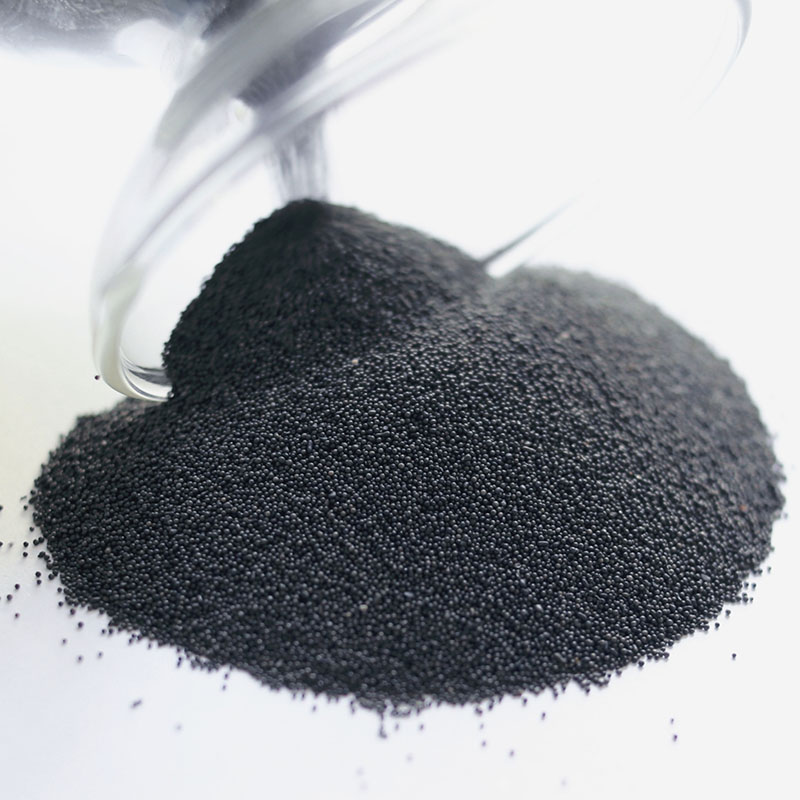
First, examine particle morphology. Conventional sand grains feature angular or sub-angular shapes. They interlock randomly and resist smooth flowing. Ceramic grains possess a perfectly spherical shape. This unique geometry drastically improves material flowability. The sand pours like water around complex machinery patterns. You achieve exceptionally dense and uniform compaction. Operators secure high-quality molds without applying extreme compaction forces.
Next, consider gas permeability. A highly dense mold can sometimes trap unwanted gases. If gas cannot escape, you risk severe porosity defects in the finished casting. Fortunately, perfectly spherical grains create natural, uniform interstitial spaces between particles. These tiny venting channels provide excellent gas permeability. You strike the perfect balance. You achieve a flawlessly smooth casting surface finish while allowing all pouring gases to vent rapidly.
Finally, you must calculate binder efficiency. Angular sand requires large volumes of resin just to coat its extensive surface area. Spherical grains feature the lowest possible surface area-to-volume ratio. This geometry naturally requires significantly less liquid binder.
By implementing a true high temperature casting sand, foundries enjoy several compounding benefits:
Reduced Resin Costs: You can typically reduce binder consumption by 30% to 50%.
High Tensile Strength: Even with less resin, the spherical grains bond efficiently, maintaining exceptional core strength.
Lower Gas Evolution: Less resin burns during the pour, directly minimizing the risk of gas-related casting flaws.
Cleaner Shakeout: Molds break down easier after cooling, protecting the casting surface.
Transitioning materials demands careful planning. You cannot simply dump ceramic grains into a system calibrated for silica and expect instant perfection. Upgrading requires specific process calibrations. However, it integrates seamlessly into existing sand loop systems once adjusted.
Your first step involves calibrating binder formulations. Because ceramic grains have minimal surface area, applying your standard resin ratio creates overly wet sand. The excess resin will pool, weakening the core's tensile strength. You must dial back your resin pumps immediately. Additionally, curing times often shift slightly. Work closely with your binder supplier to establish the exact curing duration needed for the new mix.
Optimizing your reclamation system is equally crucial. Ceramic spheres possess incredible mechanical durability. Their high crush resistance means they survive intense thermal and mechanical reclamation loops effortlessly. They bounce off impact plates rather than shattering. You can routinely achieve reuse rates reaching 98%. However, you must recalibrate your dust collection and screening parameters. Since ceramic breaks down differently than silica, fine-tune your screens to capture dust without discarding healthy micro-spheres.
Mitigating implementation risk ensures a smooth transition. High upfront procurement costs intimidate many plant managers. Do not attempt a sudden, foundry-wide rollout. Instead, run heavily controlled pilot casts. The best strategy involves the following steps:
Identify your most problematic machinery casting pattern. Choose one notorious for severe veining or burn-on.
Prepare a dedicated batch of refractory foundry sand using optimized binder levels.
Pour the casting and record all production metrics carefully.
Measure the exact reduction in fettling hours and analyze the surface finish improvements.
Calculate the cost savings per casting before expanding the material to other production lines.
This phased approach validates the performance benefits in real-world conditions. It builds confidence among operators and quickly justifies the initial investment to management.
Your foundry process is only as reliable as your raw materials. Partnering with a proven supplier guarantees consistency. When shortlisting vendors, prioritize strict quality control above all else. Never accept a batch without reviewing detailed sieve analysis reports. Particle size distribution must remain consistent. If the grain sizes fluctuate wildly between shipments, your mold density will suffer immediately.
Chemical composition consistency prevents catastrophic melting during extreme pours. Insist on verification of the alumina content. Additionally, evaluate the pH neutrality of the material. Highly acidic or highly alkaline sand chemically interferes with binder curing mechanisms. A neutral pH ensures your cores harden predictably every time.
Supply chain reliability poses another major challenge. Foundries consume massive volumes of sand daily. A delayed shipment halts your entire production floor. Evaluate whether a supplier offers domestic stocking or relies entirely on international shipping. Ask about their buffer stock capabilities. Lead-time stability separates excellent partners from average vendors. You need a supplier who guarantees material availability regardless of global shipping disruptions.
Finally, demand exceptional technical support. Transitioning your facility to machinery casting sand requires expert oversight. The best suppliers do more than ship bags of material. They provide dedicated foundry application engineers. These experts visit your facility. They help operators adjust mixer settings, optimize binder ratios, and recalibrate reclamation screens. Prioritize vendors willing to support you heavily during those crucial first weeks of adoption.
Thermal stability inside the mold translates directly to extreme predictability on your production floor. When you eliminate aggressive sand expansion, you eliminate the primary cause of severe casting defects. Ceramic alternatives provide the mechanical endurance necessary for the heaviest machinery applications. Your foundry gains flawless surface finishes and drastically lower scrap rates.
We strongly recommend initiating a baseline cost-per-casting analysis immediately. Track your current expenses related to veining scrap, excessive grinding, and binder consumption. Compare these figures against the projected savings of using highly reclaimable ceramic grains. The operational benefits usually outweigh the initial material upgrade costs quickly.
Take action to secure your production lines. Contact a trusted supplier today to request comprehensive technical specification sheets. Order a sample batch for your laboratory to test flowability and binder compatibility. Schedule a consultation with a foundry application engineer to plan your first successful pilot cast.
A: High-quality ceramic sand boasts a refractoriness limit exceeding 1,800°C (3,272°F). This exceptional thermal endurance makes it ideal for heavy steel and ductile iron castings, easily handling extreme pouring conditions without melting, fusing, or breaking down.
A: The perfectly spherical grain shape improves flowability, allowing the sand to pack densely against complex patterns. This dense, uniform mold surface prevents liquid metal penetration, resulting in exceptionally smooth casting finishes and eliminating severe burn-on defects.
A: No major equipment upgrades are necessary. Ceramic sand integrates seamlessly into existing mixers and reclamation systems. You only need to make minor parameter calibrations, such as reducing resin pump output and fine-tuning reclamation dust screens.
A: Ceramic sand delivers incredibly high closed-loop recovery percentages, often reaching up to 98%. Its exceptional mechanical crush resistance means the grains bounce rather than shatter during mechanical or thermal reclamation, vastly outlasting brittle silica sand.

 English