- All
- Product Name
- Product Keyword
- Product Model
- Product Summary
- Product Description
- Multi Field Search

Views: 0 Author: Site Editor Publish Time: 2026-07-05 Origin: Site
Steel casting operates in a highly demanding environment. Pouring temperatures routinely exceed 1,500°C (2,700°F). These extreme conditions require exceptional thermal stability from your mold and core materials. Foundries historically relied on traditional silica sand to build these molds. However, this conventional material now presents a severe operational bottleneck. It drives up expensive defect rates, inflates cleaning room labor hours, and triggers strict environmental compliance issues.
Engineered ceramic sand emerges as a high-performance, lifecycle-efficient alternative for modern steel casting media. This article provides a technical and economic evaluation of making the switch. We will explore the material physics, process adaptations, and financial justifications behind this upgrade. Transitioning away from conventional methods requires careful planning. We aim to guide you through the critical steps of this evaluation. You will learn exactly how upgrading your foundry media can safeguard production margins and improve workplace safety.
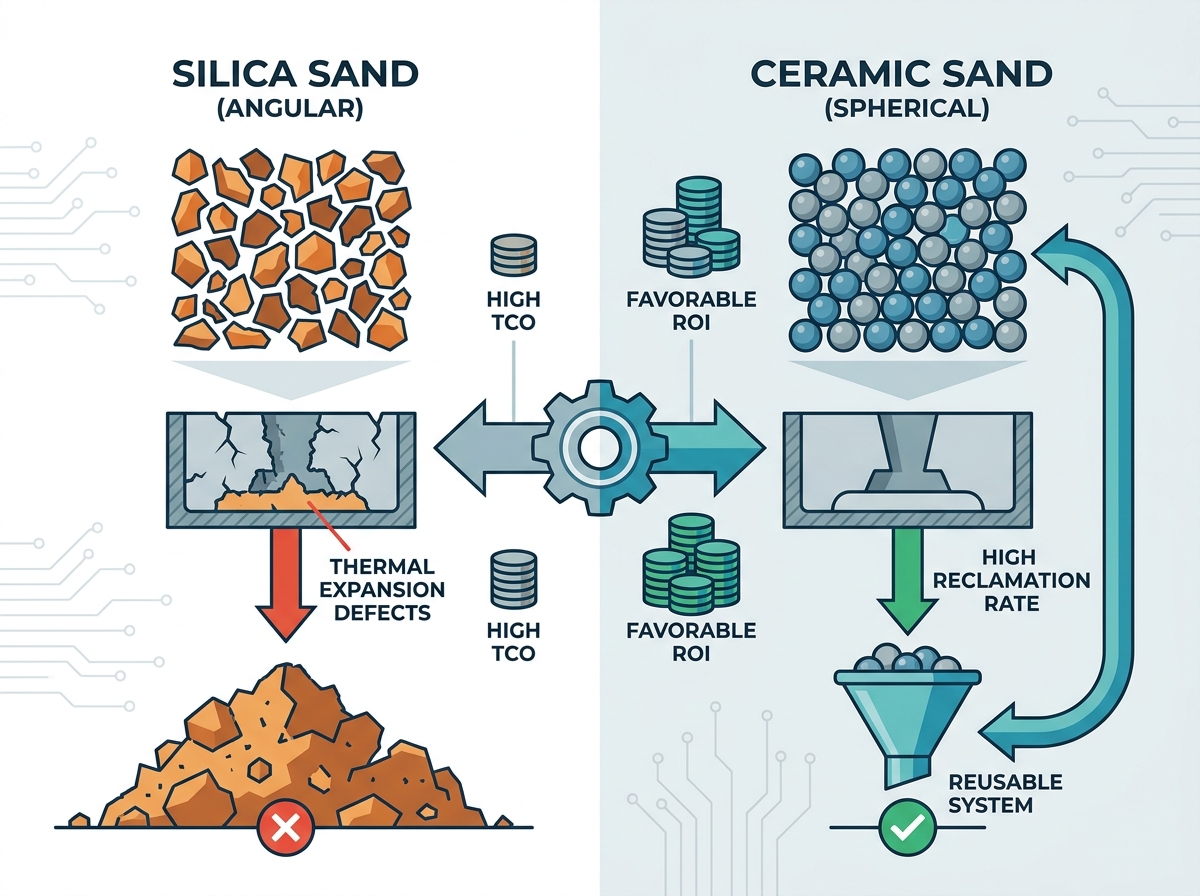
Defect Reduction: Ceramic sand’s high refractoriness and near-zero thermal expansion drastically reduce veining, burn-on, and penetration defects in steel castings.
Material Efficiency: The engineered spherical shape requires up to 50% less resin binder while improving mold permeability.
Favorable ROI: Despite a higher upfront per-ton cost, extreme durability allows for up to 98% reclamation, lowering the total cost of ownership.
Health and Safety: Switching eliminates breathable free silica, aiding in strict OSHA/environmental compliance.
Silica undergoes a disruptive phase change known as quartz inversion. This physical transformation occurs rapidly near 573°C (1,063°F). The sand grains expand unevenly during this heating phase. This sudden volumetric change fractures delicate core structures inside the mold. Molten steel immediately flows into these newly formed cracks. The resulting casting defect is known as veining. Foundries spend heavily on specialized anti-veining additives to counteract this natural expansion. Dimensional inaccuracies also plague the final casting, forcing engineers to over-engineer part tolerances to compensate for mold swelling.
Heavy steel sections hold massive thermal mass. Silica possesses a relatively low melting point compared to industrial ceramics. The sand face essentially fuses when exposed to prolonged, intense heat from the pouring process. This phenomenon leads to severe sand burn-on and metal penetration. Molten steel forces its way into the porous mold surface, creating a rocky, metallic crust on the casting exterior. Operators cannot simply shake this hard crust away during demolding.
We must frame casting defects as expensive operational burdens rather than simple quality issues. Poor surface finishes directly inflate manual labor costs. A casting suffering from veining or burn-on requires extensive post-processing. Operators spend hours grinding, arc gouging, and welding affected areas. This labor-intensive finishing slows down production velocity. The cleaning room frequently becomes the primary bottleneck in a busy foundry. Upgrading your molding media addresses these specific defects directly at the source.
Workplace safety regulations grow stricter every year. Crushed silica breaks down continuously during the molding, pouring, and shakeout cycles. This constant degradation releases respirable crystalline silica dust into the foundry atmosphere. Prolonged exposure causes silicosis, a severe and irreversible lung disease. Regulatory bodies enforce strict permissible exposure limits for silica dust. Failing to maintain these limits brings hefty fines and legal liabilities. Foundries must invest massive capital into complex dust collection systems to maintain basic compliance.
Crushed silica grains feature angular, irregular, and jagged shapes. They interlock poorly and restrict natural gas flow through the mold. Engineered spherical casting sand offers a geometrically perfect alternative. Perfectly round grains pack together smoothly and uniformly. This uniform packing creates highly consistent void spaces between individual grains. Gases generated during the pouring process escape freely through these open channels. Exceptional permeability drastically reduces gas porosity defects in your final castings.
Understanding surface area physics unlocks immediate material savings. Spheres naturally possess the lowest surface-area-to-volume ratio of any geometric shape. Angular grains require excess resin to coat their jagged, expansive surfaces completely. Round grains require significantly less binder to achieve complete surface coating. You can hit identical tensile strength targets using far less chemical binder. Foundries routinely cut resin consumption by up to 50 percent after switching media. Lower binder levels directly result in less gas generation during the molten pour.
Ceramic grains exhibit near-zero thermal expansion. They remain dimensionally stable when shocked by molten steel. This volume stability eliminates the mechanical stress placed on fragile cores. You no longer need expensive anti-veining additives in your sand mix. The dimensional accuracy of your castings improves dramatically. Cores hold their shape perfectly under extreme thermal loads.
Heavy steel casting generates aggressive basic slags and reactive iron oxides. Silica reacts chemically under these harsh conditions, causing mold degradation. Ceramic materials remain highly inert by comparison. They resist chemical attack at the delicate mold-metal interface. This inertness prevents complex chemical burn-on. The castings shake out cleanly, revealing excellent surface finishes right out of the mold.
Material Performance Comparison Chart
Performance Attribute | Conventional Silica Sand | Engineered Ceramic Sand |
|---|---|---|
Grain Shape (Morphology) | Angular and irregular | Perfectly spherical |
Thermal Expansion | High (subject to quartz inversion) | Minimal to near-zero |
Resin Binder Demand | High (large surface area) | Low (up to 50% reduction) |
Permeability | Low to moderate | Exceptionally high |
Dust Generation | High (friable under stress) | Very low (high fracture resistance) |
Evaluating materials strictly by raw price per ton creates a distorted financial picture. Ceramic media costs significantly more upfront than mined silica. True financial evaluation requires shifting focus to the actual cost per poured casting. This holistic framework accounts for material efficiency, labor savings, and equipment longevity. The initial purchase price becomes a minor factor when viewed across hundreds of casting cycles. Foundries achieve superior profitability by calculating the full lifecycle efficiency of their consumables.
Extreme durability drives the economic argument for reusable ceramic foundry sand. Silica fractures easily during mechanical reclamation. You must constantly purchase new sand to replace the degraded dust blown out by filters. Ceramic grains resist mechanical shock and thermal fracture. Reclamation systems routinely recover 95 to 98 percent of the ceramic media intact. This extreme durability shrinks your monthly sand purchasing volume to a fraction of past levels. Less waste sand also means drastically lower landfill disposal fees.
Operating costs drop rapidly once you optimize the new system. You immediately stop buying anti-veining agents. Your resin and catalyst purchases drop by nearly half. High refractoriness also minimizes the need for heavy refractory washes. You spend less money coating molds and less time drying them in ovens. These combined consumable savings quickly offset the higher initial sand price. Your supply chain becomes simpler and easier to manage.
Lowering your scrap rate directly boosts profitability. Preventing veining and penetration keeps expensive parts out of the rework bin. Your finishing department spends less time grinding away fused sand. Welders spend less time repairing structural surface defects. Getting castings right the first time improves customer satisfaction and accelerates delivery schedules. Freeing up the cleaning room allows the entire foundry to increase total throughput.
Ceramic media possesses a higher bulk density than traditional silica. A mold packed with ceramic grains will weigh significantly more. You must evaluate your existing tooling and handling equipment before making the switch. Heavy molds place added strain on cranes, conveyor belts, and automated molding lines. Engineers should calculate the increased mold weight beforehand. You might need to reinforce core boxes or adjust robotic handling protocols to manage the denser material safely.
Never run legacy silica binder recipes on engineered ceramics. Using traditional resin levels will cause severe defects. Excess binder pools between the round grains because they have far less surface area. This pooling generates massive gas volumes during pouring, leading to severe blow-out defects. You must aggressively recalibrate your binder levels downward. Proper chemical calibration optimizes core strength and prevents gas porosity when using ceramic mold making foundry sand.
Upgrading your media affects your entire machinery line in surprisingly positive ways.
Mixers and Core Shooters: Spherical grains flow like water. They fill complex core boxes rapidly and evenly. The smooth shape drastically reduces frictional wear on mixer blades, pumps, and shooter tubes.
Pneumatic Delivery: Smooth grains transport easily through pneumatic pipes. You will notice fewer pipe blowouts and vastly reduced wear on metal elbows.
Reclamation Units: Standard mechanical and thermal reclaimers handle ceramics beautifully. The robust grains survive aggressive mechanical scrubbing without fracturing into useless dust.
Transitioning a whole foundry overnight introduces unnecessary production risk. We highly recommend a strategic, step-by-step adoption process.
Identify a highly complex, defect-prone casting that routinely causes veining or burn-on.
Run isolated core trials on this specific part using properly recalibrated binder levels.
Analyze the resulting casting for surface finish improvements and dimensional accuracy.
Calculate the exact labor and consumable savings derived from this single successful trial.
Gradually expand ceramic usage to entire molds, and eventually, integrate it into the full foundry reclamation loop.
Quality control defines a successful foundry operation. Your chosen ceramic foundry sand steel casting supplier must deliver unwavering consistency. Variations in grain size ruin mold permeability and core strength. Demand strict adherence to expected AFS Grain Fineness Numbers (GFN). Every shipped lot must match your specified distribution curve perfectly. Reliable sizing prevents sudden, unexplained defect spikes on the production floor.
Chemical composition determines high-temperature performance. Verify the alumina (Al2O3) percentage before finalizing any purchasing contract. True high-performance media requires high alumina levels to withstand heavy steel pouring temperatures. Request detailed mineralogical reports from your vendor. Ensure the product lacks impurities that might trigger low-temperature melting phases during the pour.
A premium supplier acts as a true process partner. They should offer more than just raw material delivery. Look for partners who provide active, on-site technical assistance. Experienced engineers will help you troubleshoot core-room challenges. They guide you through the tricky process of binder recalibration and mixer tuning. Exceptional technical support accelerates your transition timeline and minimizes costly trial-and-error.
Material shortages halt production lines entirely. Evaluate the vendor's inventory capacity and global logistics network. Ask about their historical delivery lead times and emergency shipping capabilities. A reliable partner maintains healthy buffer stocks. They proactively manage shipping delays to keep your foundry running smoothly, regardless of broader supply chain disruptions.
Silica sand remains the traditional default, but the operational demands of high-quality steel casting increasingly justify the switch to engineered ceramic media. Upgrading solves foundational manufacturing problems like veining, chemical burn-on, and dangerous silica dust exposure. Success heavily depends on viewing this material as an engineered system, not a simple one-to-one commodity replacement. Calculating your real cost-per-casting reveals massive long-term savings in reclamation yields, reduced chemical usage, and slashed finishing labor.
We encourage casting engineers and purchasing managers to take immediate action. Request a material sample from a reputable supplier today. Schedule a technical consultation and run a localized core trial. You will see the surface finish improvements and operational efficiencies firsthand.
A: Yes, many foundries use ceramic as a premium facing sand while keeping silica as the backing sand. However, mixing introduces complexities during reclamation. The differing densities and thermal properties mean you must carefully manage the sand system to prevent unpredictable binder reactions and varying permeability in reclaimed batches.
A: No. Standard mechanical and thermal reclaimers work exceptionally well. In fact, reclamation units often run with higher efficiency due to the ceramic sand's extreme durability. The spherical grains resist mechanical crushing, meaning your existing equipment will generate far less dust and suffer less frictional wear.
A: Foundries typically reduce resin usage by 20% to 50%. The exact reduction depends heavily on your specific binder system, core geometry, and desired tensile strength. The perfectly spherical shape drastically reduces surface area, allowing you to achieve strong bonds with significantly fewer chemicals.
A: Upgrading completely eliminates respirable free silica, which is the direct cause of silicosis. However, it is not entirely free of general dust. Mechanical processes still generate particulate matter from burned binders and minimal grain friction. Standard industrial dust mitigation and ventilation practices remain strictly required for a safe workplace.

 English