
- All
- Product Name
- Product Keyword
- Product Model
- Product Summary
- Product Description
- Multi Field Search

Views: 0 Author: Site Editor Publish Time: 2025-11-17 Origin: Site
Ferrosilicon is a vital ferroalloy extensively used in steelmaking and cast iron production. It plays a key role in deoxidizing molten metal, controlling chemical composition, and enhancing mechanical properties, making it indispensable in modern metallurgical processes.
Understanding the production process of ferrosilicon is essential for ensuring consistent quality, operational efficiency, and optimal performance in steel and cast iron applications. Knowledge of how raw materials are selected, how furnaces operate, and which modern techniques are applied helps metallurgists and buyers make informed decisions and maintain high production standards.
This article provides a detailed look into ferrosilicon manufacturing, covering the selection of raw materials, electric arc furnace operations, reduction reactions, casting procedures, and modern energy-efficient and environmentally conscious production methods. By exploring these aspects, readers can gain a comprehensive understanding of how ferrosilicon is produced and how its quality and properties are controlled for industrial use.
The production of ferrosilicon depends heavily on carefully selected raw materials, as the quality, purity, and chemical composition of these inputs directly determine the performance, consistency, and industrial applicability of the final alloy. A thorough understanding of each component, along with proper preparation, is essential for efficient, high-quality ferrosilicon manufacturing that meets the rigorous demands of modern steelmaking and cast iron production.
Role: Silica acts as the primary source of silicon in ferrosilicon, which is crucial for deoxidizing molten metal, alloying, and improving mechanical properties in metallurgical processes.
Requirements: High purity is critical to minimize impurities such as aluminum, phosphorus, and sulfur, which can negatively affect the chemical composition, strength, and surface quality of the final alloy.
Preparation: Silica is typically crushed, screened, and sometimes washed to achieve a uniform particle size. This ensures even melting, efficient reduction reactions, and predictable silicon content, which are essential for producing consistent ferrosilicon batches.
Types: Common iron sources include scrap iron, pig iron, or iron oxide, chosen based on availability, cost, and compatibility with the furnace process.
Function: Iron provides the base metal for the alloy and reacts with silica during high-temperature reduction to form the silicon-iron compound that defines ferrosilicon.
Selection Criteria: Iron sources must be clean, free of contaminants, and carefully graded to avoid introducing unwanted elements that could compromise the chemical balance, mechanical properties, or performance of the ferrosilicon in steelmaking and cast iron applications.
Purpose: Fluxes and other additives help optimize furnace reactions, control slag formation, and improve overall melting efficiency, ensuring better silicon recovery and higher-quality output.
Examples: Minerals such as lime, dolomite, and other fluxing agents are often added to adjust slag chemistry, protect the furnace lining, and facilitate smoother reduction reactions, ultimately improving both yield and consistency of ferrosilicon.
All raw materials must meet strict quality standards to guarantee a consistent chemical composition, reliable performance, and predictable metallurgical behavior.
Proper storage, sorting, and pre-treatment are essential to prevent contamination, moisture absorption, and oxidation before charging materials into the furnace.
Uniform preparation ensures stable furnace performance, efficient reduction reactions, higher silicon recovery, and consistent final product properties, all of which are critical for industrial-scale ferrosilicon production.
Selecting, preparing, and carefully managing the right combination of raw materials is fundamental for producing high-quality ferrosilicon. By doing so, manufacturers can deliver alloys that meet industrial requirements, ensure reliable performance in steel and cast iron production, and support consistent metallurgical outcomes across a wide range of applications.
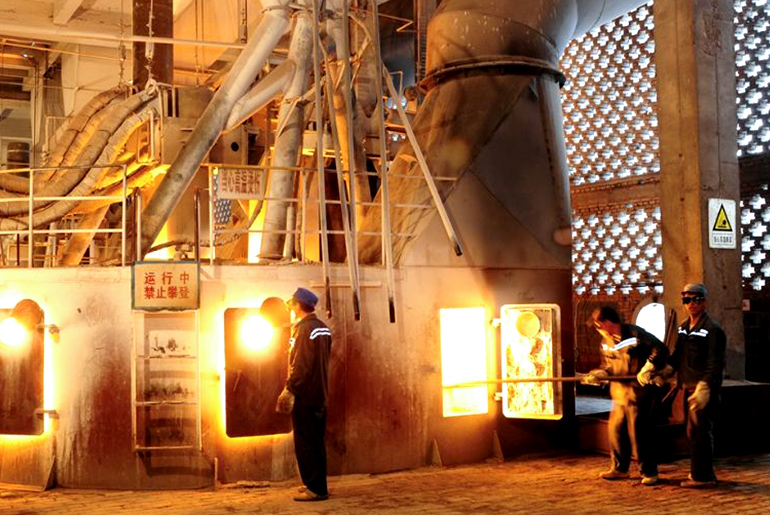
The production of ferrosilicon involves a series of carefully controlled steps to ensure the final alloy meets required chemical and physical specifications. From furnace operation to casting and modern technological enhancements, each stage plays a crucial role in achieving high-quality ferrosilicon.
Overview: The electric arc furnace is the most widely used method for ferrosilicon production due to its ability to reach the extremely high temperatures required for reduction reactions.
Step-by-Step Process:
Charging Raw Materials: Prepared silica, iron sources, and fluxes are loaded into the furnace.
Arc Heating: Electric arcs generate temperatures above 2000°C, melting the charge and initiating chemical reactions.
Reduction Reactions: Silicon is reduced from silica while combining with iron to form ferrosilicon.
Importance: Maintaining precise temperature control and energy management is critical for uniform alloy composition and minimizing energy consumption.
Chemical Process: Silica (SiO₂) reacts with iron at high temperatures, resulting in the formation of silicon-iron alloy and the removal of oxygen and other impurities.
Control Measures: Carefully controlling the furnace atmosphere, temperature, and raw material ratios ensures the desired silicon content in the final product.
Outcome: Efficient reduction reactions yield ferrosilicon with consistent chemical composition, ready for casting.
Tapping: Molten ferrosilicon is poured into molds or casting beds.
Solidification: The material cools and solidifies, forming manageable chunks or lumps suitable for industrial use.
Post-Production Quality Control: Inspections verify chemical composition, particle size, and physical properties, ensuring the product meets metallurgical standards.
Automation and Monitoring: Sensors, IoT devices, and automated systems track furnace conditions in real time, improving efficiency and reducing human error.
Energy Efficiency: Pre-heating raw materials, optimized furnace operation, and waste heat recovery reduce overall energy consumption.
Environmental Strategies: Dust collection, emission reduction technologies, and proper waste management help minimize environmental impact and comply with industry regulations.
Through a combination of traditional electric arc furnace methods and modern technological enhancements, ferrosilicon production achieves high-quality, consistent alloys while improving energy efficiency and sustainability.
Ensuring the quality and consistency of ferrosilicon is critical for its effective use in steelmaking and cast iron production. Quality control involves rigorous testing of both chemical composition and physical properties, as well as adherence to industry standards.
Key Elements: Silicon (Si) content is the primary indicator of ferrosilicon quality, typically ranging from 15% to 90%.
Impurities: Carbon (C), aluminum (Al), phosphorus (P), sulfur (S), and other trace elements are carefully measured to ensure they remain within acceptable limits.
Purpose: Accurate chemical analysis guarantees that the ferrosilicon will perform as expected in deoxidation, alloying, and mechanical property enhancement during metallurgical processes.
Particle Size: Uniform particle size ensures consistent melting and reaction rates in the furnace.
Density and Reactivity: Proper density affects handling and charging, while reactivity determines efficiency in reduction reactions.
Inspection Methods: Samples are regularly tested to confirm that physical characteristics align with production specifications, reducing variability in downstream applications.
Ferrosilicon must meet national and international standards for chemical composition, purity, and physical properties.
Adherence to standards ensures consistent performance in steel and cast iron production, minimizes defects, and supports reliable metallurgical outcomes.
Quality control protocols, including batch testing and documentation, are essential for traceability and customer confidence.
Through meticulous quality control, ferrosilicon manufacturers can deliver high-performance alloys that reliably enhance steel and cast iron properties, improve production efficiency, and maintain industrial safety and compliance.
Ferrosilicon production primarily requires high-purity silica (SiO₂) as the silicon source and iron sources such as scrap iron, pig iron, or iron oxide. Additional materials, like fluxes and additives, are used to optimize furnace reactions, improve silicon recovery, and maintain consistent alloy quality. Proper preparation and quality control of these raw materials are crucial for efficient production.
The electric arc furnace (EAF) is favored for ferrosilicon production because it can reach the extremely high temperatures required to reduce silica and form the silicon-iron alloy. EAFs offer precise temperature control, high energy efficiency, and flexibility in handling different raw material blends, making them the most practical choice for modern ferrosilicon manufacturing.
The silicon content is regulated by controlling raw material ratios, furnace temperature, and reaction time. Careful monitoring of the reduction reactions ensures the desired silicon percentage is achieved in the final ferrosilicon, meeting metallurgical requirements for steel and cast iron applications.
Modern ferrosilicon plants implement dust collection, emission control, and waste management systems. Energy-efficient furnace operation, preheating raw materials, and recycling waste heat also reduce electricity consumption and carbon emissions. Adhering to environmental regulations and sustainability practices helps minimize the overall ecological footprint of ferrosilicon production.
The production of ferrosilicon involves several critical steps, including the careful selection of raw materials, precise operation of the electric arc furnace, controlled reduction reactions, and efficient casting and cooling processes. Each stage plays a vital role in achieving a high-quality alloy suitable for steelmaking and cast iron production.
Maintaining strict quality control and leveraging modern production techniques—such as automation, real-time monitoring, and energy-efficient practices—ensures consistent ferrosilicon composition, reduces operational costs, and minimizes environmental impact.
A thorough understanding of the ferrosilicon production process enables buyers, metallurgists, and industrial operators to make informed decisions regarding alloy selection and application. By optimizing production parameters and adhering to best practices, manufacturers can produce ferrosilicon that delivers reliable performance, enhances metallurgical outcomes, and supports sustainable industrial operations.

 English


