
- All
- Product Name
- Product Keyword
- Product Model
- Product Summary
- Product Description
- Multi Field Search

Views: 0 Author: Site Editor Publish Time: 2026-01-27 Origin: Site
In the face of growing environmental concerns, industries worldwide are increasingly seeking ways to reduce their ecological footprint. The foundry industry, a key player in manufacturing high-precision metal parts for sectors such as automotive, aerospace, and industrial machinery, is no exception. Traditional sand systems, primarily based on silica sand, have long been the go-to choice for molding materials. However, with rising environmental awareness and stricter regulations, many foundries are turning to ceramic foundry sand as a more sustainable, efficient, and eco-friendly alternative. As a leading manufacturer, Shanxi Taiyue Abrasive provides high-quality ceramic foundry sand that not only improves the precision and efficiency of casting operations but also contributes significantly to reducing environmental impact. This article explores the various environmental benefits of switching to recyclable ceramic foundry sand.
The foundry industry is a major contributor to industrial waste, and one of the key environmental concerns is the disposal of used sand. Traditional sand systems, especially those utilizing silica sand, contribute significantly to waste generation, pollution, and health risks for workers.
Silica sand, while abundant and cost-effective, poses several environmental challenges. A significant issue is the disposal of used silica sand. Most foundries dispose of the sand after a single-use cycle, generating large amounts of waste. The waste sand often ends up in landfills, contributing to environmental degradation. Furthermore, the extraction and processing of silica sand itself can lead to habitat destruction and environmental contamination.
Another concern is the dust generated during the handling and casting processes. Silica dust is a major occupational hazard for foundry workers, as prolonged exposure to the dust can lead to serious respiratory illnesses, including silicosis. The environmental and health risks posed by silica dust are a growing concern for regulatory bodies worldwide. Therefore, addressing these issues by moving toward a more sustainable alternative is critical for improving the overall health and safety of workers and reducing the environmental footprint of foundries.
One of the key advantages of ceramic foundry sand is its high recyclability, which significantly reduces waste and its environmental impact. Unlike traditional silica sand, ceramic foundry sand is a durable material that can be reused multiple times, which has a direct positive effect on the foundry’s waste management and sustainability efforts.
The high recyclability of ceramic foundry sand makes it a standout choice in terms of sustainability. Traditional silica sand typically has a limited lifespan before it needs to be replaced, leading to continuous waste generation. In contrast, ceramic foundry sand can be recycled multiple times without significant degradation of its physical properties. This means that foundries can use the same sand for multiple casting cycles, dramatically reducing waste.
By incorporating recycled ceramic foundry sand into the casting process, foundries are not only lowering their material costs but also significantly cutting down on the environmental impact associated with the disposal of waste sand. With its high recyclability, ceramic foundry sand plays a crucial role in promoting a circular economy within the foundry industry, where resources are reused and repurposed, reducing the demand for new raw materials and minimizing waste sent to landfills.
The manufacturing process of ceramic foundry sand also plays a role in its environmental benefits. Unlike silica sand, which requires large quantities of chemicals and resins to bind the grains together, ceramic foundry sand typically requires fewer chemical additives. This reduction in chemical usage not only lowers the cost of production but also decreases the environmental impact of producing the material. The reduced reliance on chemical binders results in cleaner and safer foundry environments, further supporting sustainability efforts.
Additionally, the production of ceramic foundry sand typically involves using more energy-efficient processes, such as high-temperature calcination and arc furnace melting, which also contribute to the overall environmental benefit.
One of the most critical environmental challenges faced by foundries is the generation of harmful emissions and gases during the casting process. Traditional sand systems, particularly those that use silica sand, often lead to higher emissions, which can pollute the air and affect worker safety.
Ceramic foundry sand helps to mitigate this issue by generating fewer gases during the casting process. The smooth, spherical grains of ceramic sand allow for better gas permeability, which reduces the risk of gas entrapment in the mold. In contrast, traditional silica sand, with its angular grains, often leads to poor gas flow, increasing the likelihood of casting defects such as porosity and gas bubbles.
The reduction in gas generation also leads to safer working conditions in the foundry. By lowering the amount of hazardous gases released during the casting process, ceramic foundry sand helps to improve air quality within the foundry, contributing to better health and safety outcomes for workers. Additionally, fewer emissions result in a cleaner environment outside the foundry, reducing the foundry’s overall carbon footprint.
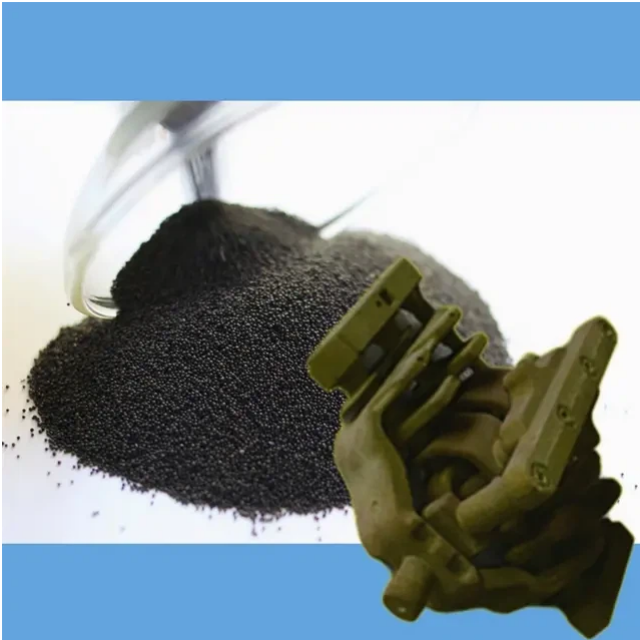
When comparing ceramic foundry sand to traditional sand systems, it is clear that ceramic sand offers a number of significant environmental advantages. Below is a table comparing the key sustainability metrics for ceramic foundry sand and traditional silica sand.
Table: Environmental Impact Metrics
Metric | Ceramic Foundry Sand | Silica/Other Sand |
Recycling Potential | Very High | Low |
Dust & Respiratory Risk | Lower | Higher |
Waste Generation | Lower | Higher |
Gas Emissions | Lower | Higher |
Raw Material Usage | Lower | Higher |
As shown in the table, ceramic foundry sand has a much higher recycling potential and generates less waste compared to traditional silica sand. Additionally, the lower levels of dust and gas emissions produced by ceramic foundry sand contribute to improved air quality and worker safety. The environmental advantages of ceramic sand are clear, making it a superior choice for foundries that are committed to sustainability.
As industries are increasingly held to higher standards of environmental responsibility, foundries must adapt to meet these new challenges. Regulatory bodies around the world are tightening regulations regarding waste disposal, emissions, and worker safety. Foundries that adopt ceramic foundry sand will be better equipped to meet these regulations and align with broader sustainability goals.
The shift to ceramic foundry sand aligns with Environmental, Social, and Governance (ESG) objectives, which are becoming increasingly important for companies worldwide. By adopting ceramic foundry sand, foundries demonstrate their commitment to reducing environmental impact, improving worker safety, and contributing to sustainable manufacturing practices. ESG criteria are not only about environmental responsibility but also about social accountability, and companies that adopt sustainable practices like ceramic foundry sand are likely to see enhanced reputation and customer loyalty.
Moreover, the sustainable practices associated with ceramic foundry sand help businesses meet global sustainability goals, such as reducing waste, lowering carbon emissions, and conserving natural resources. This aligns with the growing trend of businesses adopting circular economy practices, where resources are kept in use for as long as possible, reducing the need for new raw materials and minimizing waste.
Switching to ceramic foundry sand offers foundries a more sustainable, cost-effective, and environmentally friendly alternative to traditional sand systems. Its high recyclability, reduced waste generation, and lower emissions make it an excellent choice for foundries looking to reduce their environmental footprint while improving the quality and efficiency of their casting processes. As global regulations become stricter and sustainability goals become a central focus, ceramic foundry sand is well-positioned to play a key role in shaping the future of eco-friendly casting practices.
At Shanxi Taiyue Abrasive, we are proud to provide high-quality ceramic foundry sand that not only enhances the performance of your casting operations but also supports your sustainability efforts. For more information on how ceramic foundry sand can help your foundry achieve its environmental goals, contact us today!
1. How does ceramic foundry sand reduce waste in foundries?
Ceramic foundry sand can be recycled multiple times, significantly reducing the need for new raw materials and decreasing the amount of waste generated in the foundry.
2. What makes ceramic foundry sand more environmentally friendly than silica sand?
Ceramic foundry sand requires fewer chemicals, generates less dust and waste, and has a higher recycling rate, making it a more sustainable and eco-friendly option compared to silica sand.
3. How does using ceramic foundry sand improve air quality in the foundry?
Ceramic foundry sand reduces gas emissions during casting, leading to cleaner air and safer working conditions for foundry workers.
4. What are the key sustainability metrics for ceramic foundry sand?
Ceramic foundry sand excels in key sustainability metrics such as recycling potential, lower dust and respiratory risks, reduced waste generation, and fewer gas emissions compared to traditional sand materials.

 English


