
- All
- Product Name
- Product Keyword
- Product Model
- Product Summary
- Product Description
- Multi Field Search

Views: 0 Author: Site Editor Publish Time: 2026-01-22 Origin: Site
In the casting industry, precision and quality are paramount. The materials used in the casting process significantly impact the final product, especially when it comes to high-end, complex components. Ceramic foundry sand, particularly fused ceramic sand, offers a wide array of benefits that improve casting quality, reduce defects, and increase production efficiency. Shanxi Taiyue Abrasive specializes in providing high-quality ceramic foundry sand to help businesses enhance their casting operations. This article explores the top five benefits of using fused ceramic sand in precision casting and how it can optimize your foundry operations.
One of the key advantages of fused ceramic sand is its ability to provide excellent dimensional control. The material's spherical grain structure plays a crucial role in improving the accuracy and precision of the casting process.
The spherical shape of fused ceramic sand allows it to pack more uniformly in molds. This packing ensures that the mold cavity is filled completely, minimizing air gaps and ensuring even distribution of the material. This level of consistency in the mold filling leads to better dimensional accuracy in the final castings. For industries that require highly precise components, such as aerospace or medical manufacturing, achieving this level of accuracy is critical.
The uniform grain structure of fused ceramic sand also contributes to smoother mold surfaces, which directly influences the final product's surface finish. The result is fewer defects such as dimensional errors or surface roughness, which are often associated with the use of irregularly shaped, angular sands.
A high-quality surface finish is essential for many industries, particularly in applications where aesthetic appeal or functionality relies on smooth, uniform surfaces. Fused ceramic sand excels in this area, providing superior surface finishes compared to traditional sands.
One of the standout benefits of ceramic foundry sand is its ability to create smoother surfaces, reducing the need for extensive post-casting finishing. The spherical grains of fused ceramic sand allow for better mold packing and less friction during the casting process, leading to a smoother surface on the final casting. This is particularly beneficial for high-precision applications where every detail matters. Reducing the need for post-processing not only saves time but also lowers production costs, as less material and labor are required to smooth out the casting surface.
In industries such as automotive and aerospace, where surface quality is closely linked to both performance and appearance, the superior surface finish provided by ceramic foundry sand can make a significant difference.
The performance of any casting material is heavily influenced by the amount of binder used and the gas generated during the casting process. Fused ceramic sand stands out for its ability to reduce both of these issues, making it a more efficient and cleaner alternative to other casting sands.
Ceramic foundry sand has superior flowability due to its spherical grains, allowing it to settle more evenly within the mold. This reduces the need for excessive binders, which are typically required to hold traditional sands together. As a result, the amount of resin used in the molding process is significantly reduced. Lower resin consumption not only leads to cost savings but also helps reduce the environmental impact of the casting process by minimizing the amount of binder that needs to be disposed of.
Another major advantage of fused ceramic sand is its ability to minimize casting defects, especially porosity. The material’s excellent permeability to gases ensures that the mold can "breathe" properly during the casting process, allowing gases to escape and preventing the formation of air pockets. By reducing the amount of gas trapped in the mold, ceramic foundry sand helps prevent common defects such as porosity, which can weaken the final product. This results in stronger, more reliable castings that require less rework and have fewer defects.
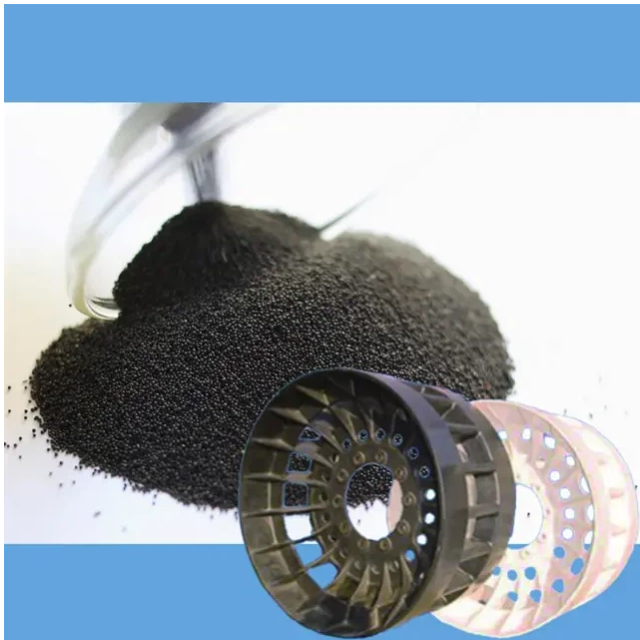
Sustainability is becoming an increasingly important factor in manufacturing, and ceramic foundry sand offers a distinct advantage in this area. Due to its unique properties, ceramic foundry sand can be recycled multiple times, reducing waste and contributing to a more sustainable casting process.
Fused ceramic sand’s durable nature means it can be reused several times without losing its essential properties. This makes it a cost-effective and environmentally friendly alternative to traditional sands, which are often discarded after a single use. By recycling ceramic foundry sand, foundries can reduce material costs and minimize the waste generated during the casting process. Additionally, using recycled materials contributes to a more sustainable production cycle, aligning with global trends toward eco-friendly manufacturing practices.
In an era where environmental sustainability is a priority, the high recycling rate of ceramic foundry sand offers a significant green advantage. Using ceramic foundry sand helps companies reduce their carbon footprint and improve their environmental credentials. Foundries that prioritize sustainability can benefit from the eco-friendly nature of ceramic foundry sand while also improving their efficiency and cost-effectiveness.
Cost efficiency is always a major concern in the manufacturing industry, and ceramic foundry sand can deliver substantial savings across various aspects of the casting cycle. From material costs to labor and processing time, fused ceramic sand offers a more cost-effective solution compared to traditional sands.
Ceramic foundry sand’s ability to be recycled multiple times means that foundries can save on the cost of purchasing new sand for each casting cycle. The high-quality nature of the sand ensures that it maintains its performance even after repeated use, further enhancing its cost-effectiveness. Over time, the savings from reduced material consumption can add up, making ceramic foundry sand a more affordable option in the long run.
The superior flowability and dimensional control provided by ceramic foundry sand result in fewer casting defects, less rework, and reduced downtime. Foundries spend less time fixing defects, improving their overall operational efficiency. Additionally, the smooth surface finish reduces the need for extensive post-casting finishing, saving both labor and processing costs. These factors combined lead to a more efficient and cost-effective casting process.
To further illustrate the cost efficiency of ceramic foundry sand, let’s take a look at a comparison of the total cost impact per casting cycle.
Table: Total Cost Impact per Casting Cycle
Cost Category | With Ceramic Foundry Sand | With Traditional Sand |
Raw Material | Lower | Standard |
Resin Usage | Lower | Higher |
Waste Disposal | Lower | Higher |
Rework Costs | Lower | Higher |
As shown in the table, ceramic foundry sand leads to lower raw material costs, reduced resin usage, and less waste disposal and rework, all of which contribute to significant savings for foundries.
To summarize, ceramic foundry sand offers multiple advantages over traditional sands, making it an ideal choice for precision casting. Its ability to improve dimensional accuracy, enhance surface finish, reduce binder consumption and casting defects, and offer high recycling rates makes it a more efficient, cost-effective, and sustainable option for foundries. Moreover, the reduced waste generation and improved cost efficiency across the casting cycle make it an attractive choice for foundry managers looking to optimize their operations and reduce production costs.
Shanxi Taiyue Abrasive offers high-quality ceramic foundry sand that can significantly enhance your foundry's casting performance. From improved precision to reduced costs and environmental impact, ceramic foundry sand is the solution your business needs to stay competitive in the rapidly evolving manufacturing landscape. If you are looking to improve your casting process and reduce defects, ceramic foundry sand is the right choice. For more information on how ceramic foundry sand can benefit your foundry, contact us today!
1. How does ceramic foundry sand improve casting precision?
Ceramic foundry sand’s spherical shape and excellent packing properties lead to better mold filling and dimensional accuracy, reducing casting defects and improving precision.
2. Can ceramic foundry sand be recycled?
Yes, ceramic foundry sand is highly recyclable, allowing for significant cost savings and environmental benefits over traditional sand materials.
3. What are the key advantages of using ceramic foundry sand over traditional sand?
Ceramic foundry sand offers lower thermal expansion, better flowability, fewer defects, improved surface finishes, and reduced binder usage compared to traditional sand.
4. How does ceramic foundry sand reduce casting defects?
Ceramic foundry sand’s superior gas permeability and smooth surface finish help reduce porosity and other casting defects, resulting in stronger, higher-quality castings.

 English


